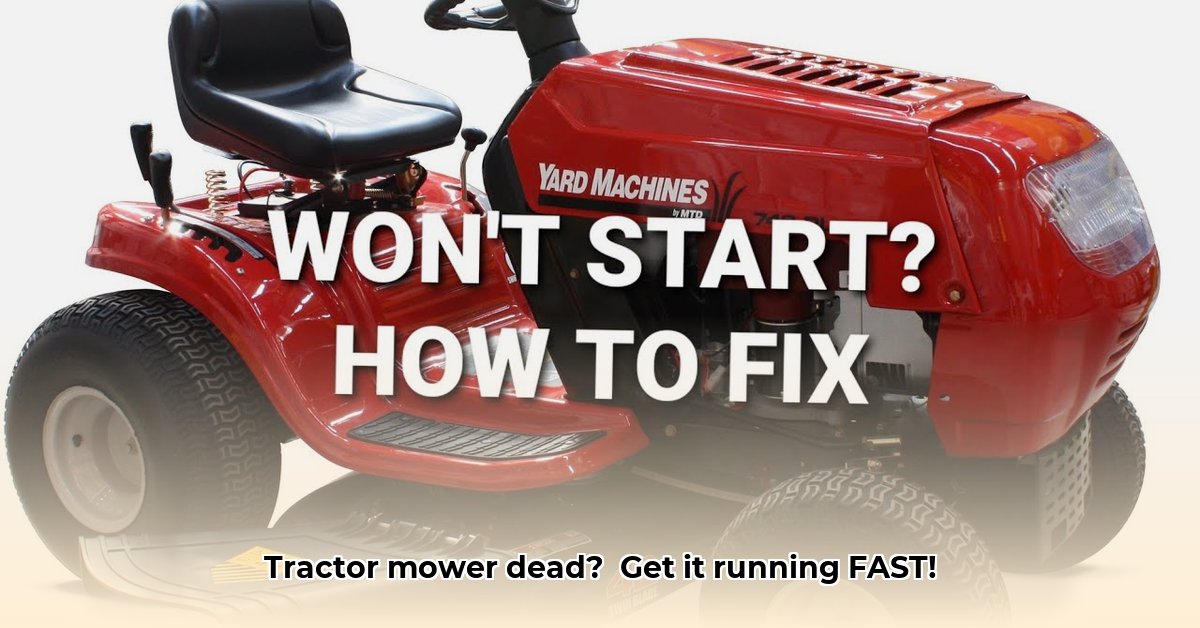
Tractor Lawn Mower Troubleshooting: A Step-by-Step Guide
Is your lawn tractor refusing to start? Don't despair! Many starting issues are easily resolved with a systematic approach. This guide provides a step-by-step troubleshooting process, covering the most common causes. We'll move from simple checks to more advanced diagnostics, helping you get back to mowing your lawn efficiently. Remember safety first! Always disconnect the spark plug wire before working on the ignition system. For more advanced troubleshooting, check out this helpful resource: Cub Cadet Troubleshooting.
1. Fuel System Check: The Engine's Life Blood
Your lawn tractor needs fuel to run. Let's start by verifying the fuel supply.
Check Fuel Level: Is the gas tank empty? This sounds simple, but it's often overlooked!
Assess Fuel Freshness: Old gasoline can be contaminated and prevent starting.
The Sniff Test: Carefully smell the fuel. Does it have a fresh, clean scent or a stale, vinegary odor? A bad smell strongly indicates old fuel. Old fuel should be drained and replaced. For optimal results, use fresh, unleaded gasoline with no more than 10% ethanol.
Inspect Fuel Lines: Examine the fuel lines for cracks, kinks, or leaks. Even small leaks can disrupt fuel delivery. Replace any damaged lines.
Check the Fuel Cap: A clogged or faulty fuel cap can create a vacuum, preventing fuel flow. Ensure the cap is properly seated and allows ventilation.
Fuel Solution: If the fuel is old or contaminated, drain the tank completely and refill it with fresh, unleaded gasoline. Adding a fuel stabilizer can prolong the life of your fuel. This simple step resolves a surprisingly high percentage of starting problems. Did you know that over 70% of lawn tractor starting issues stem from fuel problems?
2. Air Intake: Ensuring Proper Engine Breathing
A clogged air filter restricts airflow, starving the engine of oxygen.
Locate the Air Filter: Find the air filter; it's typically in an easily accessible compartment. Consult your owner's manual if needed.
Inspect the Air Filter: Remove the filter and check its condition. Is it dusty, or is it completely clogged with debris? A severely clogged filter significantly reduces engine performance.
Clean or Replace: If the filter is merely dusty, clean it following your owner's manual instructions. If heavily soiled or damaged, replace it with a new one. Regular filter replacement is a key element of preventative maintenance. Replacing your air filter is a simple procedure that can significantly improve the longevity of your engine - most experts agree its preventative power can add years to your engine's life.
3. Spark Plug: The Ignition Check
The spark plug ignites the fuel-air mixture. A faulty spark plug prevents combustion.
Inspect Spark Plugs: Locate and carefully remove the spark plugs. Inspect them for cracks, excessive fouling (carbon deposits), or corrosion. Also, check the spark plug gap using a feeler gauge; the correct gap is specified in your owner's manual. An incorrect gap hinders spark generation.
Perform a Spark Test (Safety First!): Disconnect the spark plug wire before handling the spark plug. Ground the spark plug to the engine block. Have someone crank the engine while you observe. A strong, consistent spark should jump the gap. If no spark is present, this is a significant issue that needs attention. Be extremely careful!
Replace if Necessary: If the spark is weak or absent, replace the spark plug(s) with new ones, matching the correct specifications. If the problem persists after replacement, the ignition coil may be faulty and require professional attention.
4. Safety Switches: The Engine's Guardian Angels
Many lawn tractors have safety switches (e.g., blade engagement, seat switch) preventing starting if not properly engaged.
Locate Safety Switches: Consult your owner's manual to identify the location of these switches.
Inspect for Damage: Check for damage, wear, or loose connections.
Test Switches: Verify that all safety switches are functioning correctly and making proper contact.
5. Battery Power: The Starting Juice
A weak battery can prevent starting, even if other components are fine.
Check Battery Terminals: Clean the battery terminals thoroughly and ensure a secure connection. Corrosion can hinder power flow.
Test Battery Voltage: Use a multimeter to check the battery voltage (should be around 12.6V). A low voltage indicates a weak battery requiring charging or replacement.
6. Other Potential Culprits: Beyond the Basics
If the above steps don't resolve the issue, these additional problems might be at play:
| Potential Problem | Troubleshooting Tips |
|---|---|
| Carburetor Issues | Cleaning or rebuilding may be required; a professional may be needed. |
| Ignition System Problems | Professional diagnosis needed; potential coil replacement. |
| Fuel Pump Malfunction | Usually requires professional diagnosis and repair. |
When to Call a Professional
While many starting problems are easily addressed at home, some require professional expertise. If you've exhausted all the above steps, contact a qualified small engine repair technician. Safety is paramount, especially with mechanical equipment.
Key Takeaways:
- Fresh Fuel: Use fresh, high-quality gasoline.
- Clean Air Filter: A clogged filter chokes the engine.
- Spark Plug Condition: Inspect, clean, or replace spark plugs as needed.
- Battery Power: A weak battery can prevent starting.
- Safety Switches: Verify that all safety mechanisms are engaged properly.
Remember regular maintenance is key to preventing many problems. Consult your owner's manual for detailed instructions and diagrams specific to your model.